The Coolant Ratio Calculator helps you determine the exact antifreeze and water mixture required for your engine cooling system. Whether you are performing a fresh fill or adjusting an existing blend, it calculates concentrate volume, freeze protection, boiling point, and required drain amounts. Designed for real-world automotive use, it delivers precise and practical results instantly.
Maintaining the exact fluid parameters in your vehicle is critical for engine longevity. Whether you are performing a routine radiator flush or adjusting your system for extreme winter weather, getting the exact mix of antifreeze and distilled water is essential. A coolant ratio calculator eliminates the guesswork from this process. Incorrect mixtures can lead to catastrophic engine failure, either by allowing the fluid to freeze and crack the engine block in sub-zero temperatures, or by failing to prevent boil-overs during heavy summer towing.
Most vehicle manufacturers recommend a standard 50/50 mixture of antifreeze and distilled water, which provides freeze protection down to -34°F and boil protection up to 265°F. However, specific climates or high-performance applications may require a customized blend. Manually calculating the volume of pure concentrate to add or drain from a partially filled system can be confusing.
Using a coolant ratio calculator ensures you achieve the exact target concentration based on your vehicle’s total system capacity. This provides peace of mind that your cooling system will perform efficiently, protecting critical engine components from scale, corrosion, and extreme temperature fluctuations.
Understanding the Tool’s Inputs and Outputs
To accurately balance your radiator fluid mixture, you need to understand exactly what goes into the calculation. This coolant ratio calculator operates on three primary data points:
- System Capacity: The total volume of fluid your vehicle’s cooling system holds (measured in quarts, liters, or gallons). You can easily find this metric in your vehicle’s owner’s manual.
- Current Concentration: The existing percentage of antifreeze in the system. This is typically measured using a coolant hydrometer or refractometer. If you are doing a fresh fill on an completely empty system, this value is zero.
- Target Concentration: The final percentage of antifreeze you want to achieve, usually between 40% and 60% depending on the climate of your region.
Once you input these figures, the coolant ratio calculator generates highly actionable outputs. It tells you the exact volume of pure antifreeze concentrate required for a fresh fill, or the precise amount of fluid to drain and replace if you are adjusting an existing mix. Additionally, the tool provides the estimated freezing point, boiling point, and specific gravity of your final mixture.
The Mathematics of Coolant Mixing
The math powering the coolant ratio calculator relies on volumetric blending formulas. The most common real-world scenario involves adjusting an existing mixture by draining a portion of the fluid and replacing it with pure antifreeze concentrate. The formula used to determine the exact drain-and-refill volume is:
$$V_{drain} = C_{total} \times \frac{P_{target} – P_{current}}{100 – P_{current}}$$
Here is what each variable represents in plain English:
- $V_{drain}$: The volume of fluid you need to drain from the radiator and replace with 100% pure antifreeze concentrate.
- $C_{total}$: The total cooling system capacity of the vehicle.
- $P_{target}$: The desired target antifreeze percentage (e.g., 50 for a 50% mix).
- $P_{current}$: The current measured antifreeze percentage currently sitting in the system.
If you are simply doing a fresh fill on a completely dry system, the formula simplifies significantly. The required volume of pure concentrate is just $C_{total} \times \frac{P_{target}}{100}$, with the remaining volume filled by distilled water. Note that the primary equation assumes you are adding pure concentrate to increase the ratio. If you are trying to decrease the concentration, the formula logic mirrors itself to calculate the volume of distilled water needed instead.
Realistic Example: Adjusting Concentration on a Truck
Let’s look at a realistic scenario where an owner needs to winterize a vehicle. Imagine you have a truck with a total engine cooling system capacity of 16 quarts. You test the current fluid with a hydrometer and find the coolant to water ratio is currently at a 25% antifreeze mix. You are moving to a colder climate and need to hit the standard 50% target concentration.
Using the formula from the coolant ratio calculator:
- $C_{total}$ = 16 quarts
- $P_{current}$ = 25
- $P_{target}$ = 50
First, subtract the current percentage from the target percentage ($50 – 25 = 25$). Next, multiply that by the total capacity ($16 \times 25 = 400$).
Then, subtract the current percentage from 100 ($100 – 25 = 75$).
Finally, divide the first result by the second result ($400 / 75 = 5.33$).
To successfully reach a 50/50 mix, you must drain exactly 5.33 quarts of the existing 25% fluid and replace it with 5.33 quarts of 100% pure antifreeze concentrate. This step-by-step approach is exactly what the coolant ratio calculator automates, preventing the frustrating cycle of guessing, testing, and draining multiple times.
How Changing Variables Impacts the System
The effectiveness of your radiator fluid mixture is highly sensitive to the inputs. Modifying your target ratio dramatically shifts both the freezing and boiling limits of the vehicle.
- Increasing the Target Concentration: Moving from a 30% to a 50% mix will significantly lower the freezing point, offering robust winter protection. However, water transfers heat more efficiently than ethylene glycol. Pushing the concentration too high (above 60%) will actually reduce the system’s ability to pull heat away from the engine.
- Changing System Capacity: The larger the cooling system, the more forgiving the mix. Being off by one quart in a heavy-duty 30-quart diesel system barely shifts the percentage. Conversely, being off by one quart in a small 6-quart compact car system drastically alters the freeze protection limit.
- Adjusting Current Concentration: If your current mix is already close to the target, the coolant ratio calculator will recommend a very small drain-and-refill volume. If the current fluid is mostly water, you will need to replace a much larger volume of fluid to bring the system up to specification.
Interpreting the Calculator’s Analysis
When you use an antifreeze mix calculator, the resulting data dictates your next maintenance step. If the tool indicates a very high drain-and-fill volume, you are making a major adjustment. In this scenario, it is often more practical to perform a complete system flush rather than trying to balance a highly diluted existing mixture.
Pay close attention to the freeze and boil limits provided in the results. If your result shows a freezing point of 10°F, and you live in a region that experiences sub-zero winters, the calculated mix is dangerously low. Conversely, if your target ratio throws a “diminishing returns” warning, you are at the limit. A concentration exceeding 65% is generally detrimental. The fluid becomes too thick to flow efficiently through the radiator fins, causing the water pump to work harder and the engine temperatures to rise. The ultimate goal is adequate protection, not maximum concentration.
System Limitations and Edge Cases
While this coolant ratio calculator accurately handles the complex math of volumetric blending, there are physical limitations to automotive cooling systems that must be respected during maintenance.
- The 100% Antifreeze Myth: A common mechanical misconception is that pure antifreeze offers the best freeze protection. In reality, 100% ethylene glycol freezes at roughly 10°F (-12°C). It must be mixed with water to depress the freezing point down to the safe -34°F range.
- Using Tap Water: The calculator implicitly assumes you are mixing pure concentrate with distilled water. Using standard tap water introduces minerals like calcium and magnesium, which scale up the radiator tubes and degrade the water pump bearings, regardless of having the perfect liquid ratio.
- Residual Water Blockage: When performing a complete flush, a significant amount of pure water often remains trapped in the heater core and the engine block. Because of this trapped volume, simply adding a pre-mixed 50/50 coolant will usually result in a highly diluted final ratio. To hit an exact 50% target after a water flush, the coolant ratio calculator will often recommend filling half the system’s total capacity with pure concentrate first, then topping off the remaining empty space with distilled water.
Frequently Asked Questions
Do I need to account for the fluid trapped in the heater core?
Yes, the total system capacity listed in your owner’s manual inherently includes the fluid inside the engine block, radiator, hoses, and the heater core. When using the coolant ratio calculator, always input the total factory capacity. If you just flushed the system with water, realize that up to a third of that total capacity may still be filled with plain water trapped inside the block.
Should I use pre-mixed fluid or concentrated antifreeze?
If you are performing a simple top-off for a minor leak, pre-mixed 50/50 fluid is convenient and prevents ratio disruption. However, if you are doing a full system fill or adjusting a poor concentration, buying pure concentrate is highly recommended. Using an antifreeze mix calculator allows you to accurately blend pure concentrate, which is significantly more cost-effective than paying for the water weight included in pre-mixed jugs.
What happens if I cannot drain enough fluid to reach my target?
Sometimes, the coolant ratio calculator will suggest draining a volume that exceeds what naturally flows out of the radiator petcock. If your target requires draining 8 quarts, but your radiator only drops 5 quarts, you have two options. You can either perform a full system flush to start from zero, or you can drain the 5 quarts, add pure concentrate, run the engine to mix it, and repeat the calculation and drain process a second time.
Does this coolant ratio calculator work for both ethylene and propylene glycol?
The volumetric mixing math remains exactly the same regardless of the chemical base. The formula simply calculates the physical space the fluids occupy. However, the specific freezing and boiling point estimates provided by the tool are calibrated for standard ethylene glycol, which is the automotive industry standard. Propylene glycol has slightly different thermal properties and density readings.
Will a higher concentration fix an overheating engine?
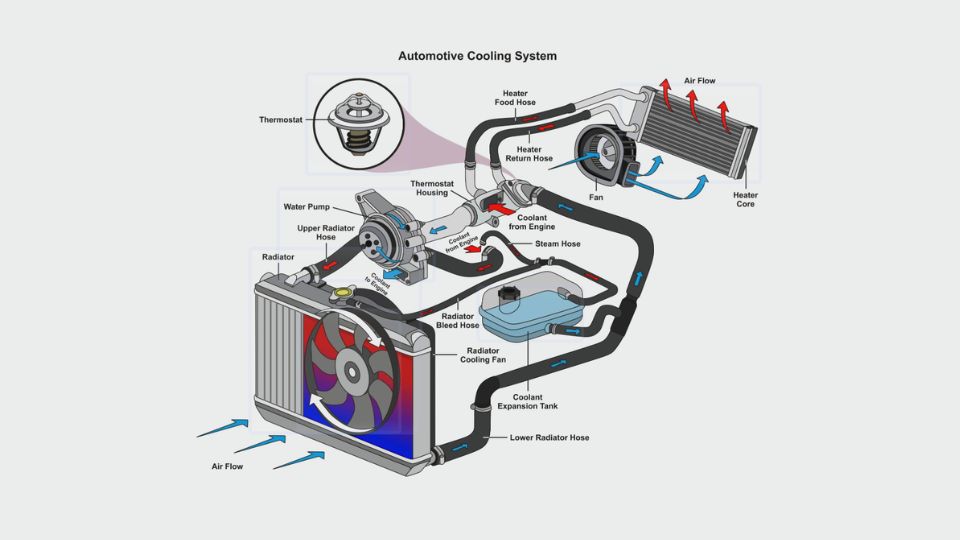
No, increasing the antifreeze ratio will not cure an overheating problem, and it may actually make it worse. Distilled water is much better at transferring heat than antifreeze. The primary job of the antifreeze is to prevent freezing and corrosion, while raising the boiling point slightly. If your car is overheating with a proper 50/50 mix, you likely have a mechanical issue such as a failing water pump or a stuck thermostat.
Is the standard 50/50 rule too strict for warmer climates?
For residents in climates that never experience freezing temperatures, a 50/50 mix is not strictly necessary for freeze protection alone. Some track cars and warm-climate vehicles run a 30% coolant to 70% water ratio to maximize heat transfer. However, dropping below a 30% concentration is generally not recommended, as it heavily dilutes the anti-corrosion additives and water pump lubricants necessary for engine health.
Related Tools & Calculators: